 Appletun Grove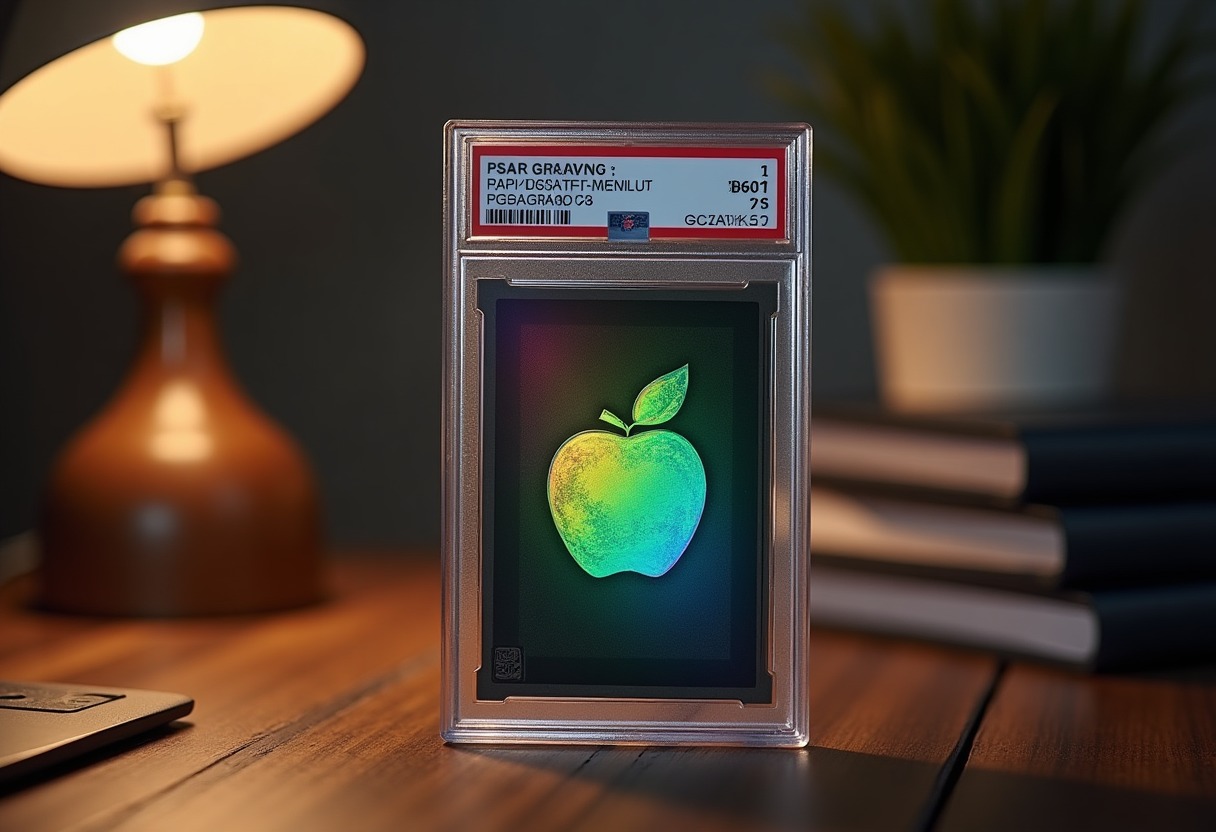
Your Appletun V alternate art from Evolving Skies sits in a top loader, centering looks perfect, but you're wondering if a PSA 10 slab would triple its value or just drain $150 from your wallet. Grading transforms certain cards into serious investments while turning others into expensive paperweights — and the decision hinges on math, not hope.
Why Grading Matters for Appletun Cards Specifically
Appletun entered the Pokémon TCG during the Sword & Shield era, making most cards relatively modern with population reports still building. Unlike vintage Charizards where PSA 10 premiums reach 10x raw prices, newer cards need strategic grading decisions. The Appletun VMAX Rainbow Rare from Evolving Skies shows raw prices around $35-45, PSA 9 versions at $60-70, and PSA 10 slabs jumping to $180-220. That 4-5x multiplier justifies grading costs — but only if your card actually grades a 10.
Modern Pokémon printing quality improved significantly compared to Base Set era cards, but Sword & Shield sets still show centering variance. Appletun cards with texture (VMAX, alternate arts, rainbow rares) face stricter grading standards because surface scratches and print lines show more prominently under magnification. Your eye-graded "mint" card might return a PSA 8 if you miss a subtle horizontal print line across the apple pie crust.
The Best Appletun Cards To Collect 2026 outlines which specific Appletun prints hold collection value, but grading strategy differs from simple collecting. You're paying $25-100+ per card for professional authentication and encapsulation, so the raw card value must support eventual resale or long-term hold appreciation.
PSA vs BGS: What Actually Differs for Appletun Collectors
Professional Sports Authenticator (PSA) dominates market share and liquidity. Beckett Grading Services (BGS) offers subgrades that some collectors prefer for understanding exactly where a card lost points. For Appletun cards specifically, here's what matters:
PSA advantages: Higher buyer recognition means easier resale on eBay, Mercari, and TCGPlayer. A PSA 10 Appletun V alternate art sells faster than the identical BGS 10 because more buyers search PSA exclusively. Turnaround times currently run 20-30 business days for value tier ($25/card for cards under $499), acceptable for most modern Appletun prints. The holder design uses clear plastic that showcases card artwork well, particularly important for alternate art and illustration rares. BGS advantages: Subgrades (centering, corners, edges, surface) tell you whether your BGS 9 scored 9.5/9/9/9 or 8.5/9.5/9.5/9.5 — the latter might resell stronger since one weak subcategory dragged overall grade down. Black Label BGS 10 (perfect 10s on all four subgrades) commands premiums that exceed PSA 10 prices, but getting Black Label on modern cards requires near-printing-error-level perfection. BGS holders use darker borders that some collectors prefer aesthetically, though this hides card edges partially.For most Appletun collectors, PSA makes more sense purely on liquidity. Unless you're chasing Black Labels on ultra-premium cards like the hypothetical Appletun Gold Star (if one existed), the subgrade detail doesn't offset PSA's broader market acceptance.
PSA vs BGS Comparison for Appletun Cards
| Factor | PSA | BGS | |--------|-----|-----| | Grading Scale | 1-10 whole numbers | 1-10 with half-point increments (subgrades) | | Typical Cost | $25 (value), $50 (regular), $100+ (express) | $30 (base), $40 (subgrades), $125+ (express) | | Turnaround Time | 20-30 business days (value tier) | 25-40 business days (standard) | | Market Premium (PSA/BGS 10) | Appletun VMAX RR: $180-220 | Appletun VMAX RR: $160-190 (BGS 10), $400+ (Black Label) | | Resale Liquidity | High — most buyers recognize PSA | Moderate — smaller buyer pool except Black Labels | | Holder Quality | Clear, showcases artwork fully | Black borders, premium feel but hides edges |
The cost difference between PSA value tier ($25) and BGS subgrades ($40) seems minor until you're submitting ten cards. That $150 gap covers another grading submission or a sealed Evolving Skies booster box. Calculate total costs including shipping both ways and insurance before committing to batch submissions.
When Grading Your Appletun Card Actually Pays Off
Raw math determines grading viability. Take your estimated raw card value, add $40-60 in total grading costs (service fee + shipping + insurance), then compare against sold PSA 9 and PSA 10 prices. If PSA 9 barely exceeds your total investment and PSA 10 offers only 20-30% premium over PSA 9, you're gambling on grade outcomes.
Grade these Appletun cards:- Appletun V alternate art (Evolving Skies 163/203) if centering looks 55/45 or better on all sides — raw $45-60, PSA 10 reaches $180-250
- Appletun VMAX Rainbow Rare if surface shows zero scratches under bright light — substantial PSA 10 premium justifies $25 grading fee
- First edition Appletun holos from Sword & Shield base (if you somehow acquired sealed product early) — population reports remain low
- Any Appletun card with obvious miscut, misprint, or error that adds collectible appeal — grading authenticates the error and protects against "fake error" accusations
- Common/uncommon Appletun prints with raw values under $5 — grading costs exceed any possible return
- Already played condition cards with visible wear — you know they're grading PSA 7 or below, which rarely sells above raw pricing
- Cards you pulled from recent sets where you can't objectively verify gem mint condition — wait until you've acquired a card grading magnifier loupe and learned to spot print lines, edge wear, and centering issues under magnification
The Most Valuable Appletun Cards identifies which prints have established secondary markets. Cards without existing PSA populations or sold listings offer too much uncertainty for grading speculation unless you're building a personal registry set and resale doesn't matter.
Pre-Grading Protection: Card Handling That Preserves Value
Grading companies reject or reduce grades based on damage that occurred between pack opening and submission. Every touch introduces risk. Cards straight from packs should go directly into penny sleeves card holders before any handling — not after looking at them unsleeved, not after showing friends, immediately.
Top loaders protect cards during storage but create friction damage during insertion. Always sleeve first in a penny sleeve, then insert into the top loader with the opening of the penny sleeve facing opposite the top loader opening. This prevents the card from sliding partially out and getting edge wear against the top loader's rigid edge. For cards you're seriously considering grading, double-sleeve: inner perfect fit sleeve (opening down), then outer penny sleeve (opening up), then top loader.
Store potential grading candidates flat in a cool, dry space away from windows. UV exposure fades card backs and borders over months of sunlight exposure. Humidity above 60% invites edge warping on modern cards despite their glossy coating. A UV protection card display works for showcasing already-graded slabs, but raw candidates belong in darkness until submission.
Check out Appletun Collection Display Ideas for ways to showcase already-graded slabs without risking your raw cards.
Submission Process: Getting Your Appletun Cards to Graders Safely
PSA and BGS both require online account setup before submissions. You'll declare card values, select service tiers, and pay upfront. Undervaluing cards (claiming a $150 card is worth $50 to access cheaper grading tiers) violates terms of service and can result in rejected submissions or account suspension.
Pack cards using the "penny sleeve → top loader → team bag" method. Place multiple top-loaded cards together in a team bag (or two team bags for extra protection), then use cardboard backing on both sides secured with painter's tape. Never use packing tape directly on top loaders — the adhesive transfers and damages the plastic. A card grading submission kit includes most materials needed for professional packing.
Ship with full insurance covering declared card value. USPS Registered Mail offers highest security for valuable shipments but moves slowly. UPS and FedEx with signature confirmation work for most submissions under $1,000 total value. Keep tracking numbers and photograph your packed submission before sealing — if cards arrive damaged or claims of missing cards arise, you'll need proof of condition at shipping time.
Turnaround times fluctuate based on grading company backlogs. PSA's 20-30 day value service estimate assumes normal volumes, but submissions spike around new set releases and holiday seasons. Plan submissions during slower periods (January-March typically) if you're not in a rush. BGS generally runs longer turnarounds but offers more consistent timing.
Post-Grading Protection: Displaying and Storing Slabs Properly
Graded slabs aren't indestructible. The plastic holders scratch, crack if dropped, and fog with improper storage. Trading card slab display cases come in wall-mount, shelf, and UV-protective versions. Wall-mounted cases prevent accidental drops but concentrate UV exposure if placed near windows. Shelf cases allow rotation and repositioning but risk being knocked over.
Store slabs flat or vertically — never stack horizontally more than 5-6 high, as bottom slabs can crack under weight over time. Keep slabs at room temperature; attics and basements experience temperature swings that cause plastic expansion/contraction and potential holder cracking. Graded cards from the Appletun V Vmax Card Value Guide deserve slab protection that matches their investment level.
Clean slab cases with microfiber cloths only. Paper towels scratch plastic. Never use glass cleaner or ammonia-based products — they fog the plastic permanently. If a slab develops cracks or separates, contact the grading company about reholder services (typically $10-15) rather than attempting DIY fixes with tape or glue.
For serious Appletun collectors building theme collections, consider registry sets. PSA's Set Registry allows you to track completion of specific sets (like all graded Appletun cards from Sword & Shield era) and compete for rankings. This adds collecting goals beyond simple card accumulation and often increases long-term engagement with the hobby.
If you're also collecting physical Appletun items beyond cards, the Best Appletun Plush Guide and Appletun Room Decor Ideas show how to build cohesive collections across multiple formats.
FAQ
How much does it cost to grade an Appletun card at PSA? PSA's value tier costs $25 per card for declared values under $499, with 20-30 business day turnaround. Add $15-25 for shipping both ways and $5-10 for insurance on a typical submission of 5-10 cards. Total cost per card runs $30-40 for value service. Should I grade my Appletun VMAX Rainbow Rare? Only if the card shows zero surface scratches, excellent centering (55/45 or better), and sharp corners under magnification. Raw prices sit around $35-45, but PSA 10 versions sell for $180-220 — a worthwhile premium if you're confident in gem mint condition. What's the difference between PSA 9 and PSA 10 for Appletun cards? PSA 10 represents gem mint condition with near-perfect centering, sharp corners, smooth edges, and pristine surface. PSA 9 allows minor imperfections like slight centering variance (60/40) or a tiny edge nick visible under magnification. Market prices often double or triple from PSA 9 to PSA 10 on premium Appletun cards. Can I submit cards directly to BGS or PSA without a membership? Yes, both companies accept individual submissions without dealer memberships. You'll pay standard rates and turnaround times. Dealer accounts offer submission discounts but require minimum volumes that casual collectors rarely meet. How do I protect my Appletun cards before sending them for grading? Use penny sleeve → top loader → team bag method for each card. Add cardboard backing on both sides of your stacked cards, secure with painter's tape (never packing tape), and ship with full insurance and tracking. Photograph everything before sealing the package.The Grading Decision Matrix
Grading transforms premium Appletun cards into preserved investments when the math supports it — and into expensive mistakes when emotion overrides calculation. Run the numbers on specific cards, verify condition honestly with magnification tools, and choose grading companies based on your resale timeline and market preference. Your PSA 10 Appletun V alternate art deserves the same protective measures as any $200+ collectible.
Some links on this page are affiliate links. We may earn a small commission if you purchase through them, at no extra cost to you.