 Appletun Grove
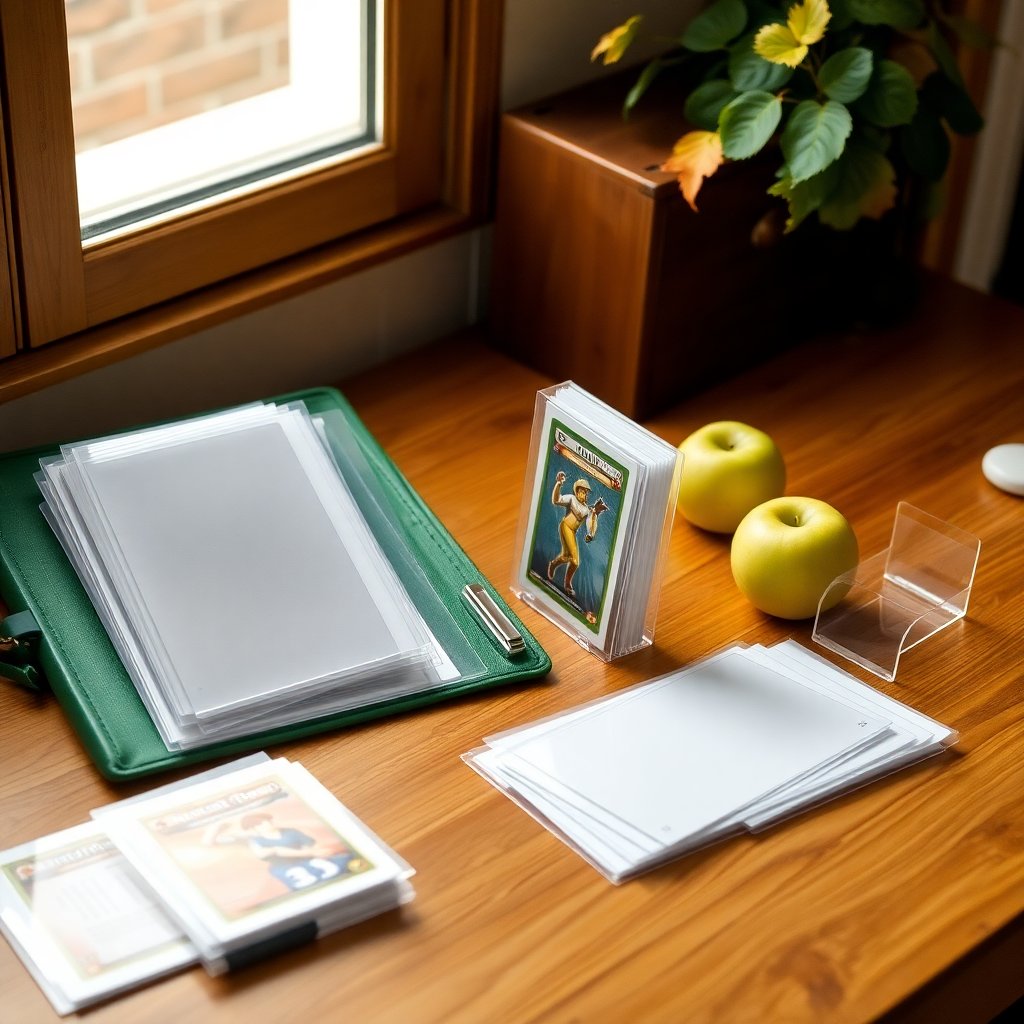
A pristine apple-dragon card can lose a chunk of its value in a single careless afternoon. A soft corner ding, a hairline surface scratch, a little humidity curl — none of it is dramatic in the moment, but all of it is permanent. The good news is that keeping your Appletun cards sharp is not complicated or expensive. It just takes the right supplies used in the right order, plus a few habits that quickly become second nature.
Here is how collectors actually protect the apple line, from a single loose pull to a full themed binder.
Start with the layered-protection basics
The core idea behind card protection is layering. No single product does everything, so serious collectors stack cheap, purpose-built layers that each guard against a different threat: friction, edge impacts, dust, light, and humidity.
For any card you care about, the baseline stack is simple:
- A penny sleeve goes on first. These thin, soft plastic sleeves stop micro-scratches and surface friction, which is the damage most people never see coming. They cost almost nothing, so there is no reason to skip them. → Shop soft penny card sleeves on Amazon
- A toploader or card saver goes on second. This rigid outer shell protects the corners and edges from bending and impact. Rigid card savers are gentler on the corners than hard toploaders and are what most people use when mailing or grading, while classic toploaders are sturdier for a desk or a box. → Shop toploaders and rigid card savers on Amazon
- A team bag goes on last if you want a dust seal. This resealable outer sleeve keeps the whole package clean and stops the card from sliding out of an open-topped toploader.
That three-layer stack — penny sleeve, rigid holder, team bag — is the standard for anything valuable, and it costs only a few cents per card in bulk. Get into the habit of sleeving a card the moment you pull it, before it ever touches a table.
Match the sleeve to the card, not the other way around
One detail trips up new collectors: penny sleeves and deck sleeves are not the same thing, and using the wrong one causes its own damage.
Penny sleeves are sized to hold a bare card. If you plan to also play with a card or slot it into a binder, you may want a double-sleeve setup — a snug inner penny sleeve turned sideways (the "perfect fit" method) plus an outer deck sleeve. This locks out dust from the top opening and is popular for cards that move between a display and a deck.
For the apple line specifically, this matters more than usual. Many of the most-loved Appletun and Hydrapple cards are full-art or illustration-rare pulls with large printed borders and glossy textures, and those glossy surfaces show scratches and fingerprints far more than a plain card. A clean double-sleeve keeps that art looking like it just came out of the pack. If you are chasing those premium pulls in the first place, our Pokémon TCG 30th anniversary Appletun collector guide breaks down which sets and cards are worth protecting most carefully.
Choose binders that are safe for long-term storage
For a collection you want to browse and show off, a binder is the friendliest option — but only if it is the right kind. The wrong binder actively harms cards over time.
Two rules matter most:
- Side-loading pockets, not top-loading. Top-loading binder pages let cards slide out when the binder is tipped, and worse, they can trap dust and grit against the surface. Side-loading pages hold cards securely and are the modern standard.
- PVC-free, acid-free pages. Older or cheap vinyl pages can off-gas over years and cloud or chemically stain the card underneath. Look for pages and binders explicitly labeled PVC-free, acid-free, and archival-safe.
A good zippered binder with acid-free side-loading pages also seals out dust and light when closed, which makes it one of the better everyday storage choices for a themed set. → Shop side-loading acid-free card binders on Amazon
There is a real payoff to building a dedicated apple-line binder rather than mixing everything together. Grouping Applin, Flapple, Appletun, Dipplin, and Hydrapple across facing pages turns the binder into a visual story of the whole evolution branch. If you enjoy the design thread that runs through the line, our piece on Appletun's design origins and the wyrm-and-apple-pie folklore is a fun companion to page through alongside the cards.
Protect the cards you actually play
Not every apple-line card lives behind glass. If you run Hydrapple in an active deck, those cards take real wear from shuffling, and that is exactly where matte, high-quality deck sleeves earn their cost.
For play, prioritize:
- Opaque-backed deck sleeves in a consistent color so the backs are indistinguishable, which keeps your deck tournament-legal and stops marked-card problems.
- A hard deck box to guard the whole deck between games. A snug box prevents the top and bottom cards from bowing, which is the most common play-related damage.
Sleeves do wear out. Re-sleeve a competitive deck when the edges start to whiten or split, because a nicked sleeve edge is both a marked-card risk and a gap for grit to reach the card. For a full breakdown of building around the apple dragon at the table, see our Hydrapple ex competitive TCG guide, which covers the cards worth sleeving up first.
Show off the showpieces safely
Half the joy of collecting is seeing the cards, and a locked-away binder does not scratch that itch. For your best one or two pulls, a display case lets you enjoy the art while still guarding it.
Look for cases that are UV-resistant, since prolonged light exposure is the slow killer of card color — the reds and golds in apple-line art fade first. A screw-down acrylic case or a UV-filtering stand keeps a signature card visible on a shelf without leaving it exposed to sun or dust. → Shop UV-resistant acrylic card display cases on Amazon
A few placement tips make a big difference:
- Keep displayed cards out of direct sunlight and away from windows, even inside a UV case. UV filtering slows fading; it does not stop it entirely.
- Avoid hanging cards above a heat source like a radiator or the top of a TV cabinet. Heat and temperature swings encourage warping.
- Aim for stable, moderate humidity. Too dry and cards can get brittle; too damp and they curl or grow spots. A room that is comfortable for you is usually fine for cards.
Build simple handling habits
Supplies do most of the work, but a handful of habits protect your collection between all those layers.
Handle cards by the edges, always. Fingerprints carry oils that etch into a glossy surface over time and are nearly impossible to fully remove. When you do need to wipe a slabless card, use a clean dry microfiber cloth and a light touch — never a household cleaner. Wash and dry your hands before a long sorting session. It sounds fussy, but clean, dry hands are the cheapest card protection there is. Store boxes flat and out of the way. Bulk cards in a proper storage box should sit snugly so they cannot slide and rub, but not so tight that pulling one bends the rest. Keep the box somewhere with a stable temperature — a closet shelf beats an attic or a garage every time. Do a light inventory pass now and then. Flipping through a binder every so often lets you catch a curling page or a loosening sleeve early, while it is still a five-minute fix rather than permanent damage.A quick starter checklist
If you are outfitting a collection from scratch, this modest kit covers almost everything:
- Penny sleeves and rigid card savers for anything valuable
- A side-loading, acid-free binder for the display collection
- Matte deck sleeves and a hard deck box if you play
- One UV-resistant display case for your best pull
- A microfiber cloth and a stable, moderate-humidity storage spot
None of it is expensive, and it all pays for itself the first time it saves a card from a corner ding. For a sense of how the wider hobby thinks about card care and grading standards, the official Pokémon Trading Card Game site is a reliable starting point, and the community reference at Bulbapedia's Appletun entry) is handy for confirming exactly which cards belong to the apple line before you sort them.
The takeaway
Protecting an Appletun collection is not about buying the most expensive gear — it is about layering cheap, purpose-built supplies and handling the cards with a little care. Sleeve the moment you pull, cap valuable cards in a rigid holder, store the display set in a safe binder, and keep your showpieces out of the sun. Do that, and the apple dragon on your shelf will look as sweet in five years as it does today.
Affiliate disclosure: some links above are Amazon affiliate links, and Appletun Grove may earn a small commission on qualifying purchases at no extra cost to you. Product guidance here is general collecting advice; always check a product's own specifications for archival-safe and UV-resistant claims before buying.