 Appletun Grove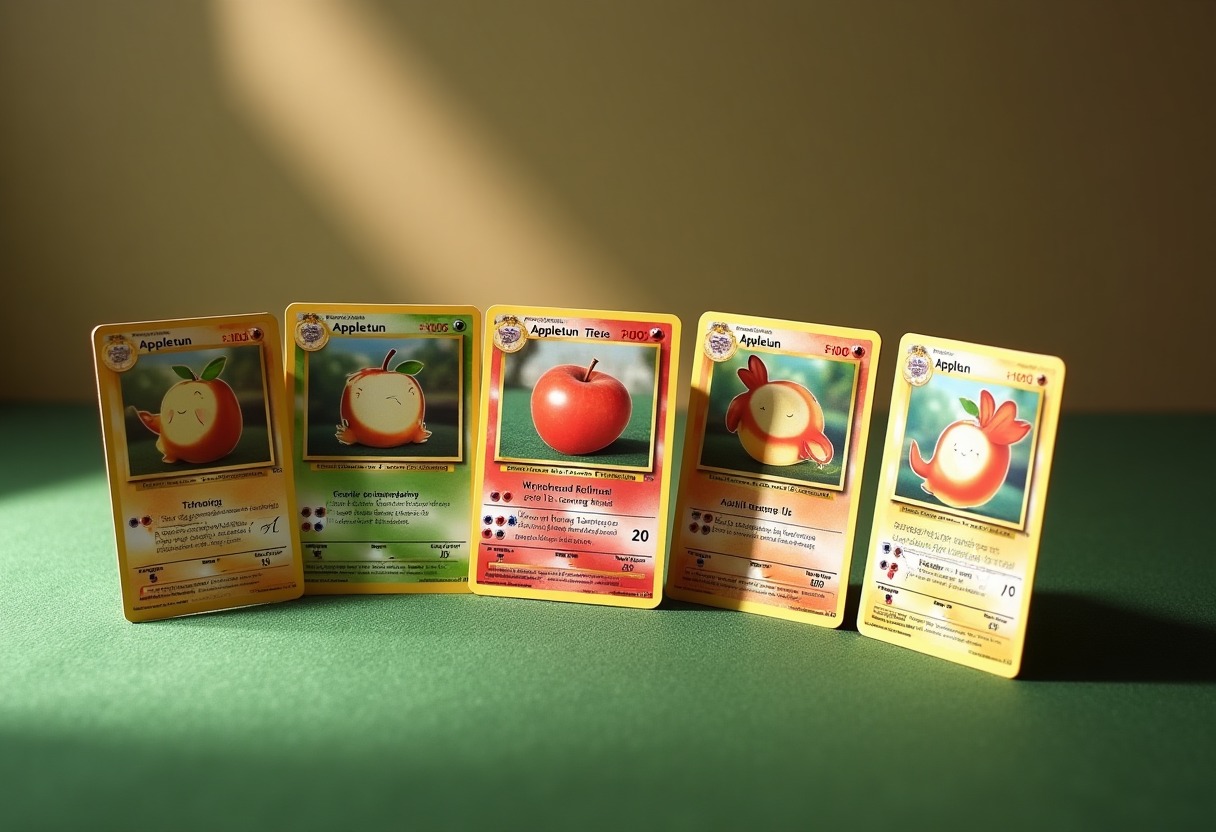
Appletun's first appearance in the Pokémon Trading Card Game came with Sword & Shield Base Set in February 2020, and since then, 15 unique cards have showcased the apple pie dragon through wildly different artistic lenses. From kawaii close-ups to battle-ready action poses, each illustrator has interpreted Appletun's syrupy charm in ways that tell us everything about how official Pokémon art direction has shifted over the past six years.
Why Appletun's TCG Art Matters More Than Most Pokémon
Appletun presents a unique challenge for TCG illustrators: it's both a food-based design and a Dragon-type powerhouse. According to Bulbapedia's Appletun entry), its body literally functions as a baked dessert, with skin that tastes like sweet nectar when eaten. Most Dragon-types get fierce, intimidating artwork (think Garchomp or Salamence), but Appletun needs to balance adorable with formidable.
This tension creates fascinating variety across cards. Some artists lean into the cozy aesthetic, positioning Appletun among autumn leaves or berry bushes. Others emphasize its Dragon typing with dynamic poses and energy effects. The evolution of these choices mirrors broader trends in Pokémon TCG illustration — a documented shift toward more diverse art styles and less reliance on Ken Sugimori's original flat coloring approach that defined the early TCG years.
For collectors building an Appletun collection display, understanding these artistic phases helps you identify which cards complement each other visually versus which ones stand out as statement pieces worth special protection with → Shop trading card display frames on Amazon.
The Launch Era: Sword & Shield Base Through Battle Styles (2020-2021)
Appletun's debut card featured artwork by Masakazu Fukuda, establishing the baseline aesthetic that subsequent artists would either honor or rebel against. Fukuda depicted Appletun mid-waddle with its mouth open in what reads as either a yawn or a contented sigh — perfectly capturing the Pokédex description of its sleepy, food-coma personality.
The Vivid Voltage set gave us two contrasting approaches. Mitsuhiro Arita, one of the TCG's most prolific illustrators with over 400 cards to his name, created a serene forest scene with Appletun surrounded by glowing grass energy particles. Meanwhile, the Vivid Voltage reverse holo featured different lighting that made the same artwork pop differently — a reminder that → Shop Pokemon card sleeves on Amazon matters when protecting these finish variations.
Battle Styles introduced the first "action pose" Appletun by Kouki Saitou, showing the dragon rearing back to launch an attack. The background featured stylized impact lines and energy bursts — a departure from the peaceful meadow settings of earlier cards. This shift aligned with the set's martial arts theme, proving that Appletun artwork adapts to each set's narrative direction.
The VMAX Evolution: Oversized Canvas, Maximalist Detail (2021-2022)
Appletun VMAX from Evolving Skies changed everything for the apple pie dragon's visual identity. Illustrator 5ban Graphics created a towering, Gigantamax-inspired composition with Appletun dominating the frame, its body glowing with crystalline Dynamax energy. The 320 HP VMAX mechanic gave artists permission to go bigger and bolder — literally.
The full-art treatment showcased texture work that earlier cards couldn't achieve: you could practically see the flaky crust layers on Appletun's back, the sticky sheen of its syrupy skin, and individual seeds embedded in its body. Collectors hunting for Most Valuable Appletun Cards consistently rank this VMAX among the top three most visually impressive prints, with PSA 10 graded copies commanding premium prices. If you're considering grading, our Appletun Graded Card Guide breaks down when this investment makes sense.
Artistic Style Comparison: Four Distinct Approaches
| Art Style | Key Artists | Visual Markers | Best Examples | |-----------|-------------|----------------|---------------| | Cozy Naturalism | Mitsuhiro Arita, Sanosuke Sakuma | Soft lighting, forest backgrounds, minimal motion, watercolor-like textures | Vivid Voltage 024/185, Shining Fates SV093/SV122 | | Dynamic Action | Kouki Saitou, Planeta Mochizuki | Motion lines, attack effects, dramatic angles, high contrast | Battle Styles 121/163, Astral Radiance 120/189 | | Gigantamax Drama | 5ban Graphics, PLANETA Igarashi | Oversized composition, crystalline effects, low camera angle, power emphasis | Evolving Skies VMAX 121/203 | | Minimalist Modern | Oswaldo KATO, Akira Komayama | Clean backgrounds, flat color blocking, geometric shapes, pop art influence | Crown Zenith GG41/GG70 |
The "Minimalist Modern" category emerged in 2023 as Pokémon TCG illustration moved away from hyper-detailed CG renders toward graphic design aesthetics. This mirrors trends in Japanese illustration broadly, where simplified forms and bold colors have gained prestige in contemporary art circles.
Regional Art Differences: Japanese Promos vs. English Releases
Japanese exclusive promos tell a different Appletun story. The 2022 Family Pokémon Card Game promotional card featured Appletun in a distinctly kawaii style by illustrator Narumi Sato, with exaggerated round proportions and sparkle effects around its eyes. This version never received an English release, making it a prized item for import collectors.
The contrast highlights how regional preferences shape TCG art selection. Japanese releases lean harder into "iyashi-kei" (healing) aesthetics — cute, calming imagery designed to provide comfort. English markets historically favor more action-forward compositions that emphasize the competitive battling aspect. When you're shopping Best Appletun Cards to Collect 2026, these regional variants deserve separate binder sections in your → Shop Pokemon card binder pages on Amazon.
The Crown Zenith Finale: Gallery Treatment (2023)
Crown Zenith's Galarian Gallery subset gave Appletun its most artistic treatment yet. The gallery concept strips away HP counts, attack text, and gameplay elements to showcase illustration in near full-bleed format. Akira Komayama's gallery card features Appletun against a geometric autumn gradient with falling leaves, each rendered in distinct color blocking rather than photorealistic detail.
This approach positions Appletun cards as collectible art first, playable game pieces second — a philosophy that collectors appreciate when displaying cards in shadow boxes or frames rather than deck boxes. The gallery cards also introduced textured holofoil patterns that interact with the illustration rather than sitting generically on top of it, making the physical card viewing experience crucial. Our Appletun Tcg Art Variants and Illustration Styles Collectors Visual Guide explores these finish variations in depth.
What Most Collectors Miss: Background Pokémon Tell Stories
Careful observers notice secondary Pokémon appearing in Appletun artwork backgrounds. The Shining Fates card places a tiny Applin in the lower left corner, creating a visual evolution narrative within a single card. The Battle Styles card shows Flapple flying overhead — a brilliant touch acknowledging Appletun's split evolution counterpart.
These Easter eggs reward close examination with a → Shop card magnifying loupe on Amazon. They also connect to larger Pokémon world-building, showing these creatures in ecological context rather than isolated studio poses. Illustrators who include these details typically have deeper Pokémon knowledge and reference Bulbapedia extensively during the creation process.
For parents choosing cards as gifts, these narrative elements make certain cards better conversation starters. A child asking "why is Applin there?" opens discussions about evolution mechanics covered in our Applin Flapple Appletun Full Evolution Guide.
Investment and Display Strategy for Art-Focused Collectors
If you're collecting Appletun cards primarily for artwork rather than gameplay value, prioritize these factors:
Texture variation matters more than rarity. A reverse holo common with interesting foil patterns often displays better than a standard rare. The Crown Zenith gallery cards, Cosmic Eclipse secret rares, and any card with textured full-art treatment deserve → Shop Pokemon card storage box on Amazon with individual sleeves rather than mass binder storage. Artist signature hunting adds dimension. Some illustrators sign cards at conventions or through Pokémon Center events. Mitsuhiro Arita signatures appear more frequently than reclusive CG studios like 5ban Graphics. Check the lower right corner of each card for artist attribution — this tiny text determines authenticity for vintage reprints. Lighting kills holofoil over time. UV-protective sleeves aren't optional for display pieces. Cards hung in direct sunlight fade within 18 months, while properly stored cards retain color saturation for decades. If you're building an Appletun Birthday Party Ideas decoration scheme around cards, use high-quality reproductions for temporary displays and keep originals sealed. Complete illustrator sets tell better stories than mixed artists. Consider dedicating one binder page to all Mitsuhiro Arita grass-type cards, another to 5ban Graphics VMAX cards. This curatorial approach creates visual harmony and increases display impact.FAQ
Which Appletun card has the most detailed artwork? The Evolving Skies VMAX full-art version by 5ban Graphics contains the highest texture and lighting detail, with visible crust layers, seed placement, and syrup gloss effects that reward close examination. The oversized canvas of VMAX cards gave illustrators room for complexity impossible on standard card dimensions. Do Japanese and English Appletun cards use different artwork? Most cards share artwork across regions, but exclusive Japanese promos like the 2022 Family Pokémon Card Game release feature unique illustrations never printed in English. These import cards typically cost 30-50% more than standard releases due to scarcity and kawaii aesthetic appeal to Western collectors. Which illustrator has drawn Appletun the most times? Mitsuhiro Arita leads with three separate Appletun cards across different sets, each showing the dragon in naturalistic forest settings. His consistent style makes his Appletun cards easily identifiable and popular among collectors who appreciate traditional Pokémon TCG aesthetics over modern CG approaches. Are older Appletun cards more valuable than recent ones? Not necessarily — the Crown Zenith gallery card and Evolving Skies VMAX typically command higher prices than the original Sword & Shield base version despite being newer releases. Artwork quality, special treatments, and print run size affect value more than chronological order for modern cards. What's the best way to store different Appletun card finishes together? Use penny sleeves inside top-loaders for individual protection, then separate standard holo from reverse holo from full-art in different binder sections. Never stack different finish types directly against each other in storage boxes, as texture differences can cause scratching during transit or temperature shifts.Every Appletun card represents a different artist's interpretation of what makes this dragon special — the challenge is deciding whether you collect every version or just the ones that speak to you.
Some links on this page are affiliate links. We may earn a small commission if you purchase through them, at no extra cost to you.